Youth Lenses as Tools for Local Action

How Youth-Led Cinema is Reshaping Governance and Advocacy in San Manuel, Isabela

by Jerome Dulin

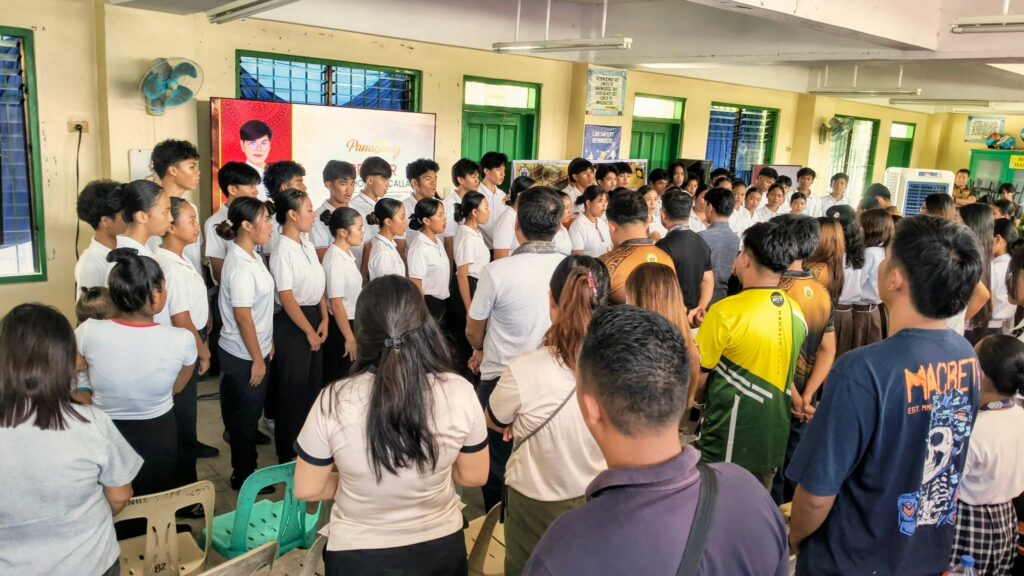
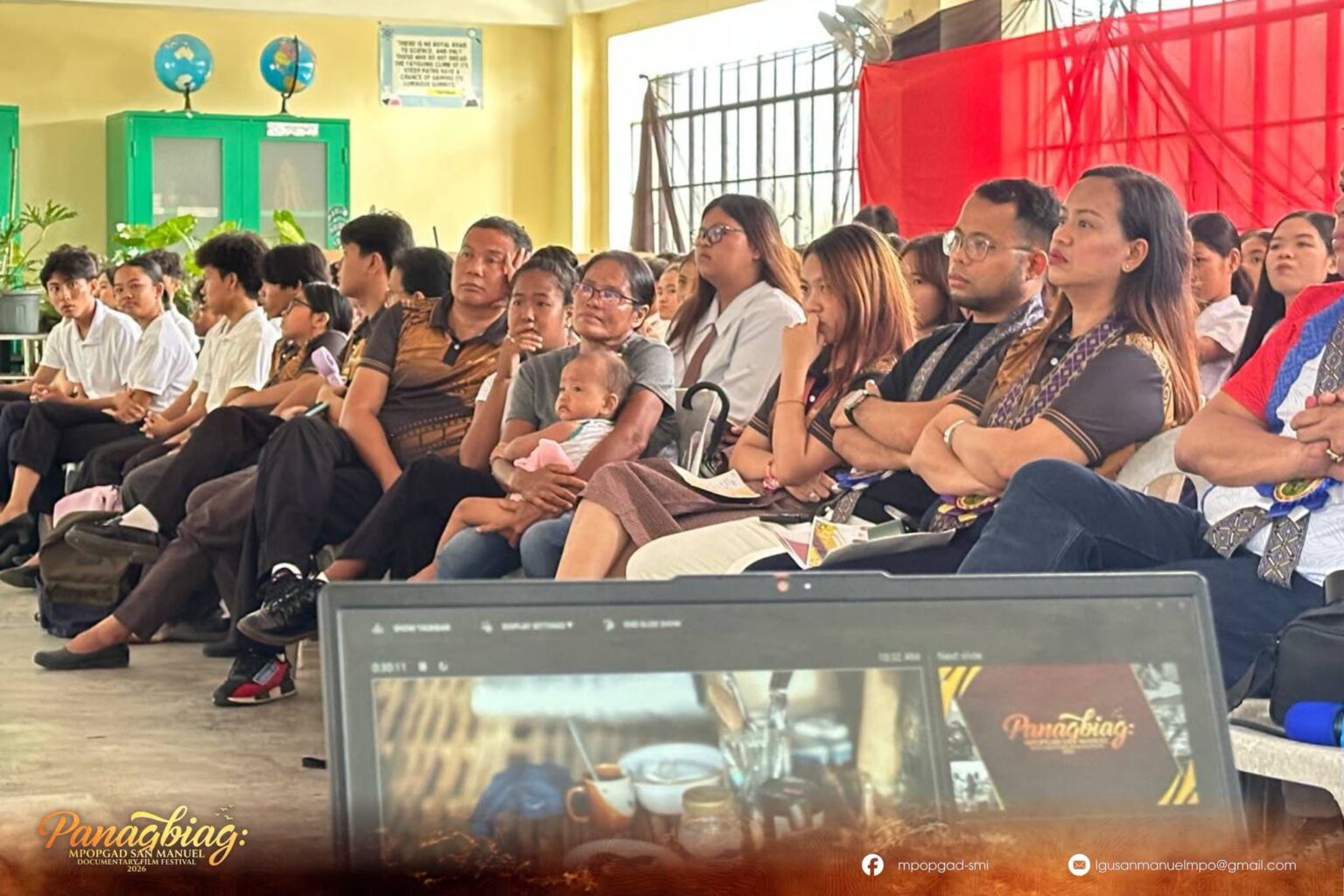
On August 20, 2026, the premiere of the five official entries of the Panagbiag Documentary Film Festival at Callang National High School represented far more than a showcase of artistic talent. Organized by the Municipal Population, Gender and Development Office under the leadership of Ms. Mary Grace G. Pineda, and fully backed by Mayor Faustino “Dondon” U. Dy IV and the Municipal Council, the festival established a direct link between youth storytelling, grassroots community development, and local policy lobbying.
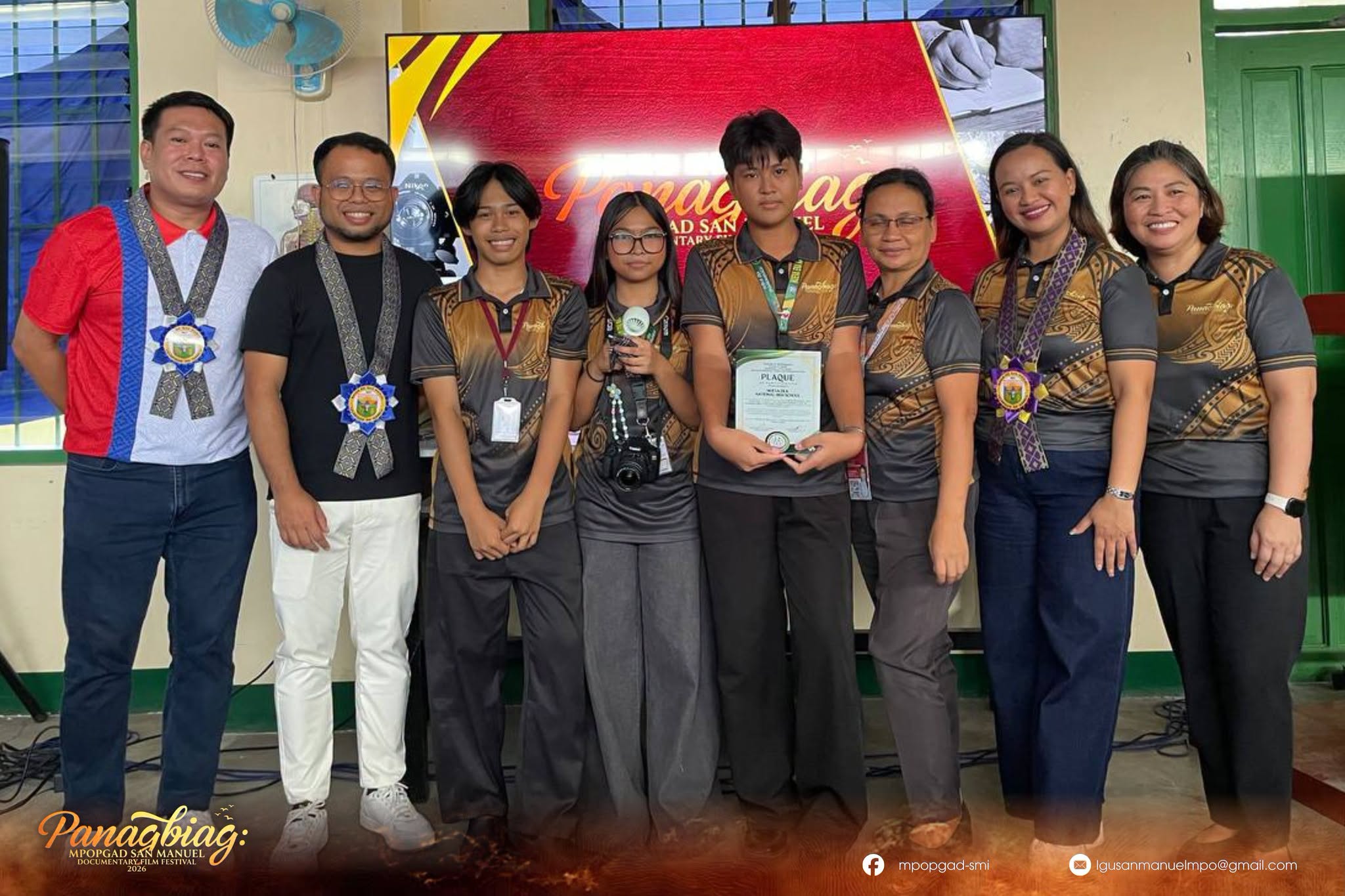
 

By turning the camera on their own environments, these young documentarists have moved from passive observers to active participants in civic life. Rather than abstracting social issues, the films anchor them in real, lived experiences—demanding that local government units (LGUs) look closely at the systemic realities shaping the next generation.
Filmmaking as Participatory Governance

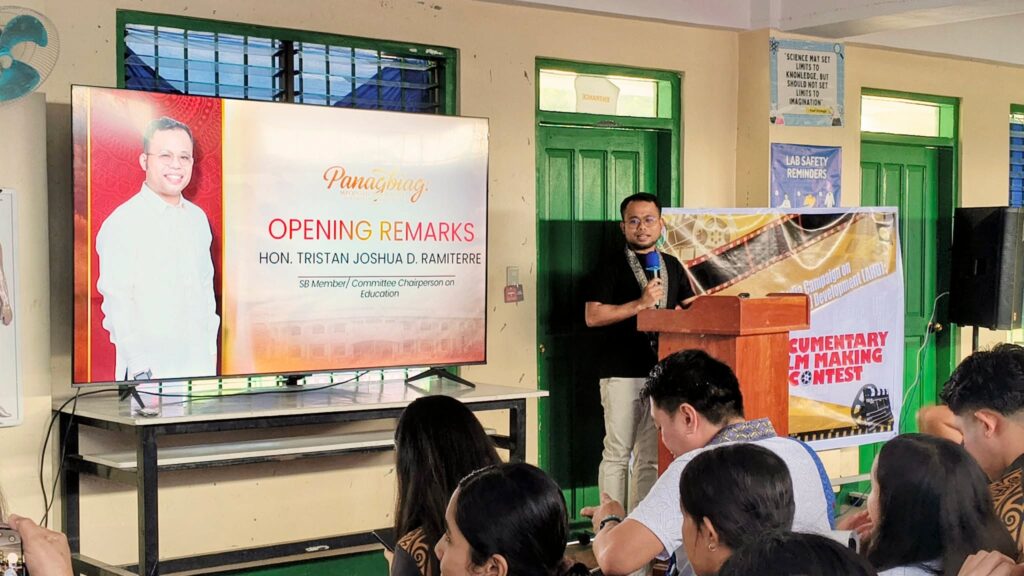
During the premiere screening, Municipal Councilor Tristan Raniferre articulated the true ambition behind the festival: to use film as a mechanism for listening. Cinema, in this context, serves as an unvarnished window into the silent struggles and forward-looking dreams of the youth.

Raniferre emphasized that while these socio-economic hurdles represent real hardship, they do not define the individuals facing them. Instead, they lay down a challenge for community leaders to construct targeted policy interventions, social support programs, and community-driven safety nets alongside the youth sector.

The Official Entries & Their Socio-Policy Focus

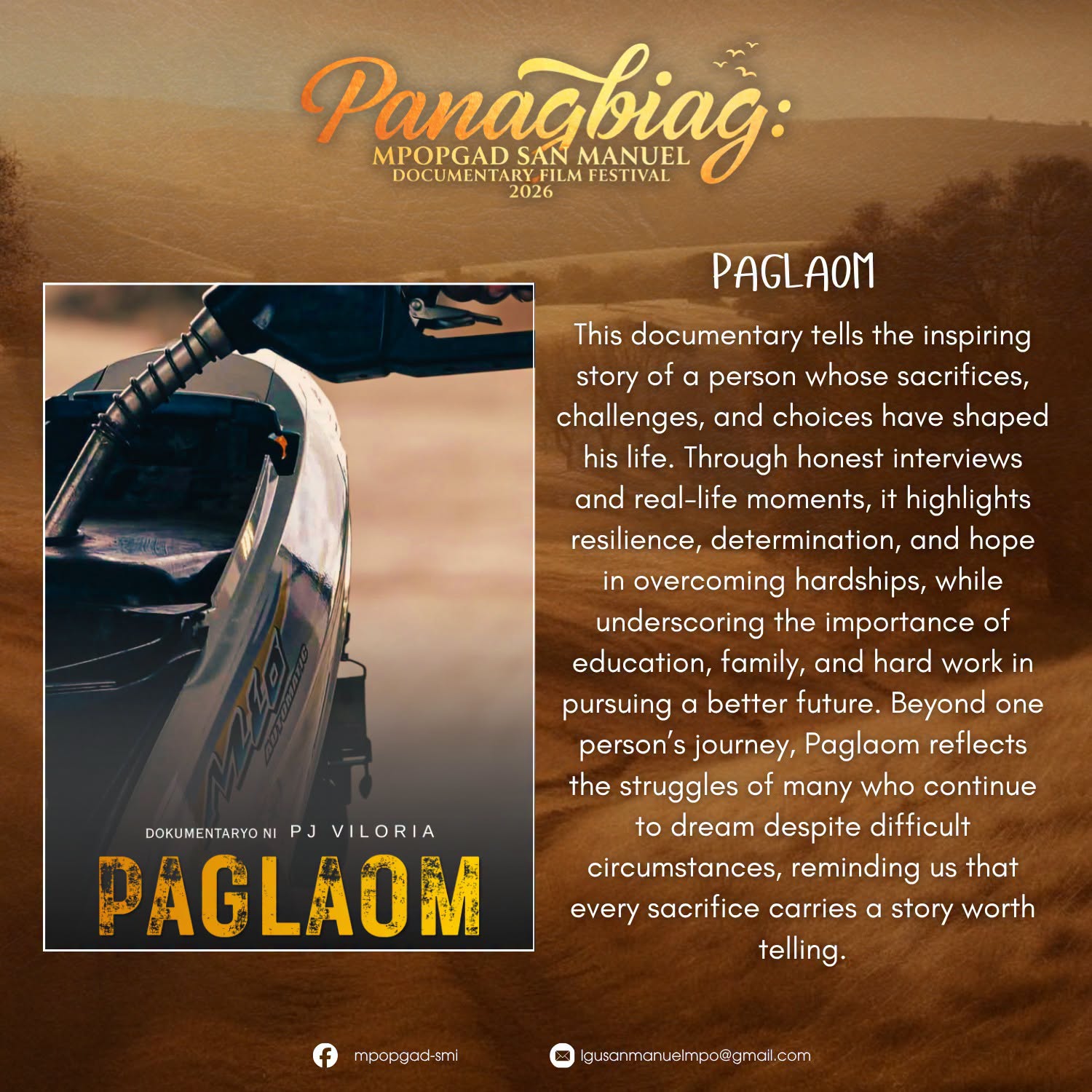
  • Paglaom (dir. PJ Viloria): Examines the long-term socio-economic strain of interrupted education. The documentary follows a young father navigating single parenthood while his wife works abroad as an Overseas Filipino Worker (OFW), shedding light on the human cost of economic migration and early family responsibilities.


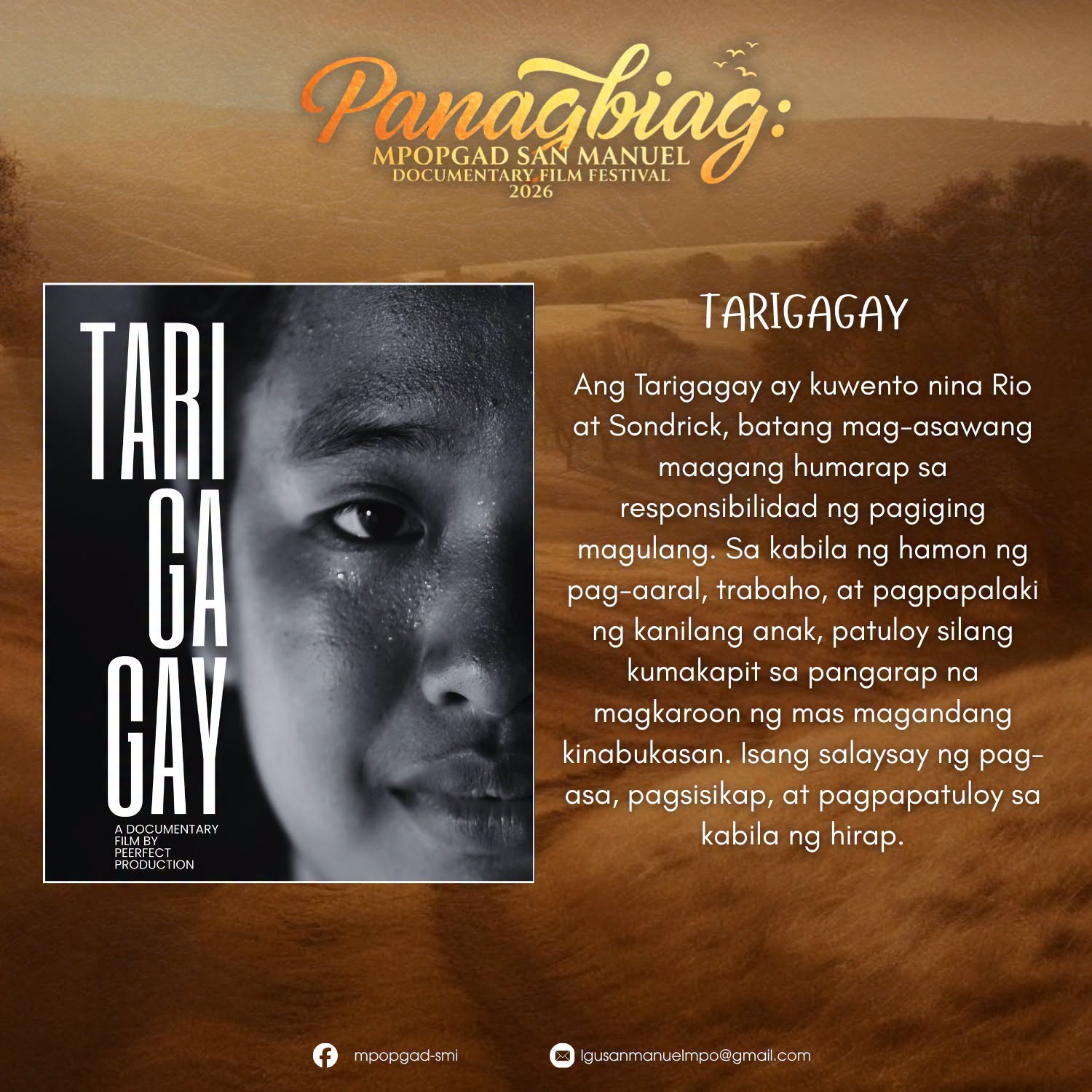
  • Tarigagay (by Perfect Production): Provides a raw look into the daily realities of Rio and Sondrick, two young people caught in the complexities of teenage pregnancy. The film calls for stronger local reproductive health education and youth support services.


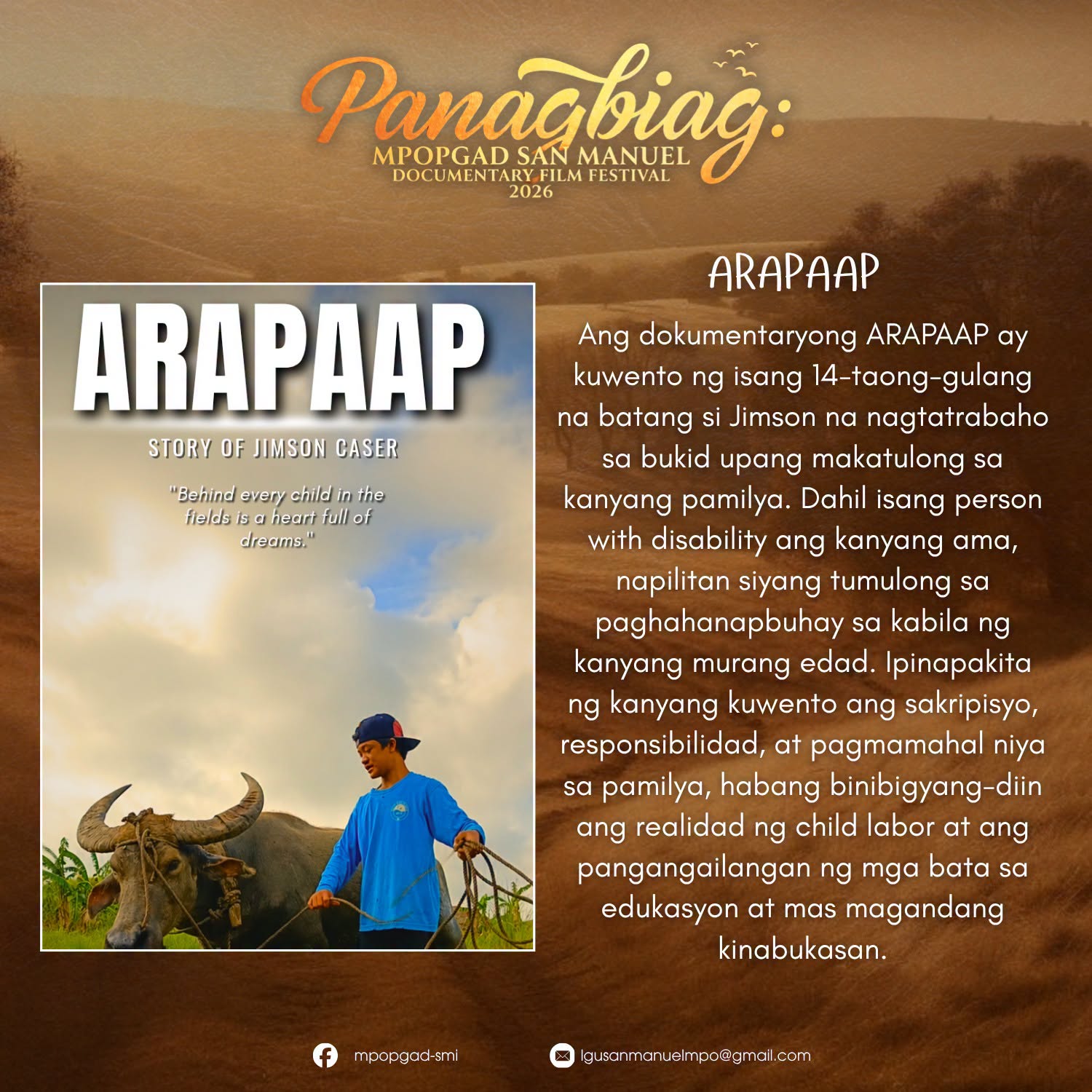
  • Arapaap (dir. Jinson Caser): Unpacks the fine line between traditional agricultural upbringing and formal child labor regulations. By exploring children’s involvement in farmwork, the film prompts essential dialogue on rural education, poverty, and child welfare policies.


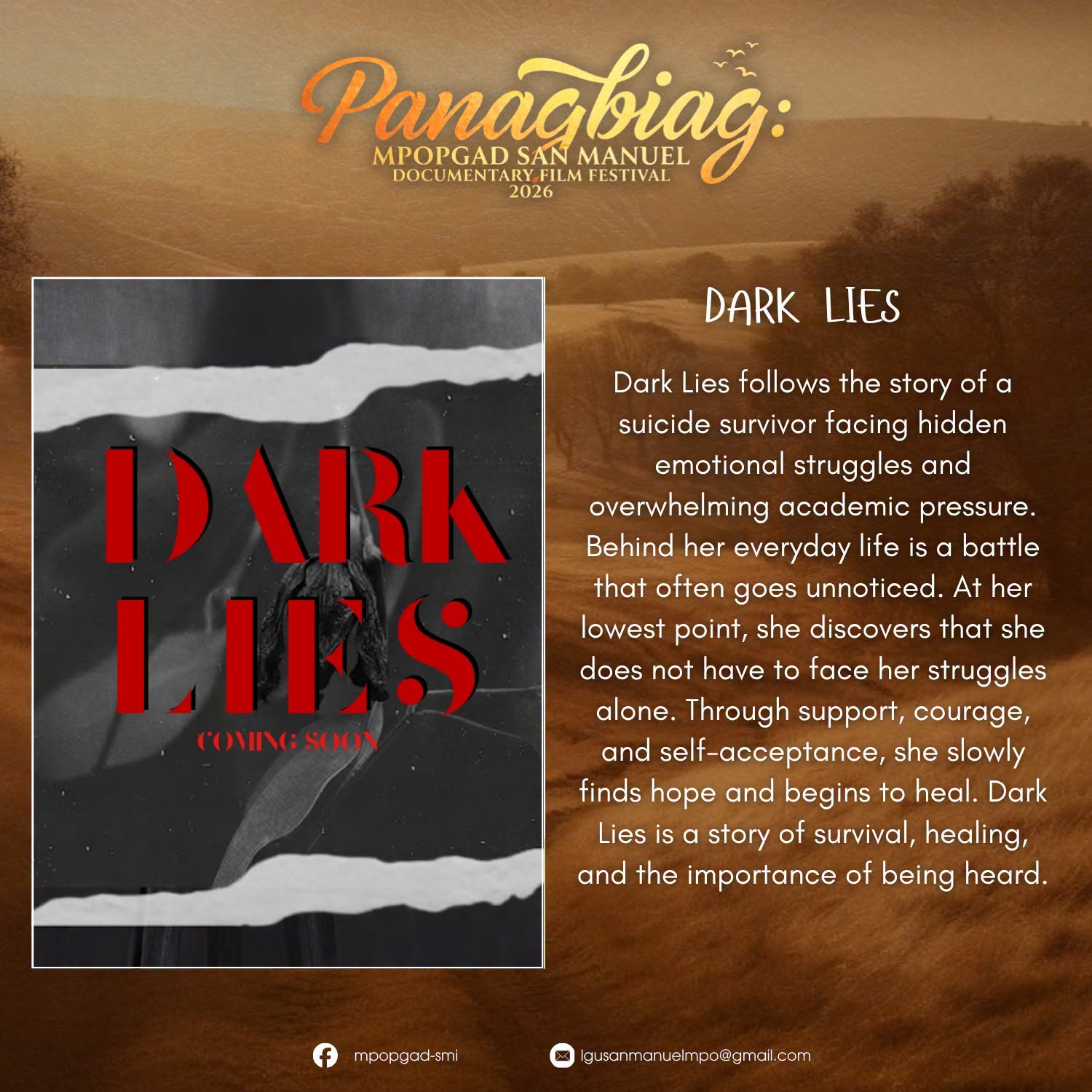
  • Dark Lies: Confronts the psychological toll of student bullying. It serves as a direct call to action for educational institutions and local councils to establish robust anti-bullying frameworks and accessible mental health support system.


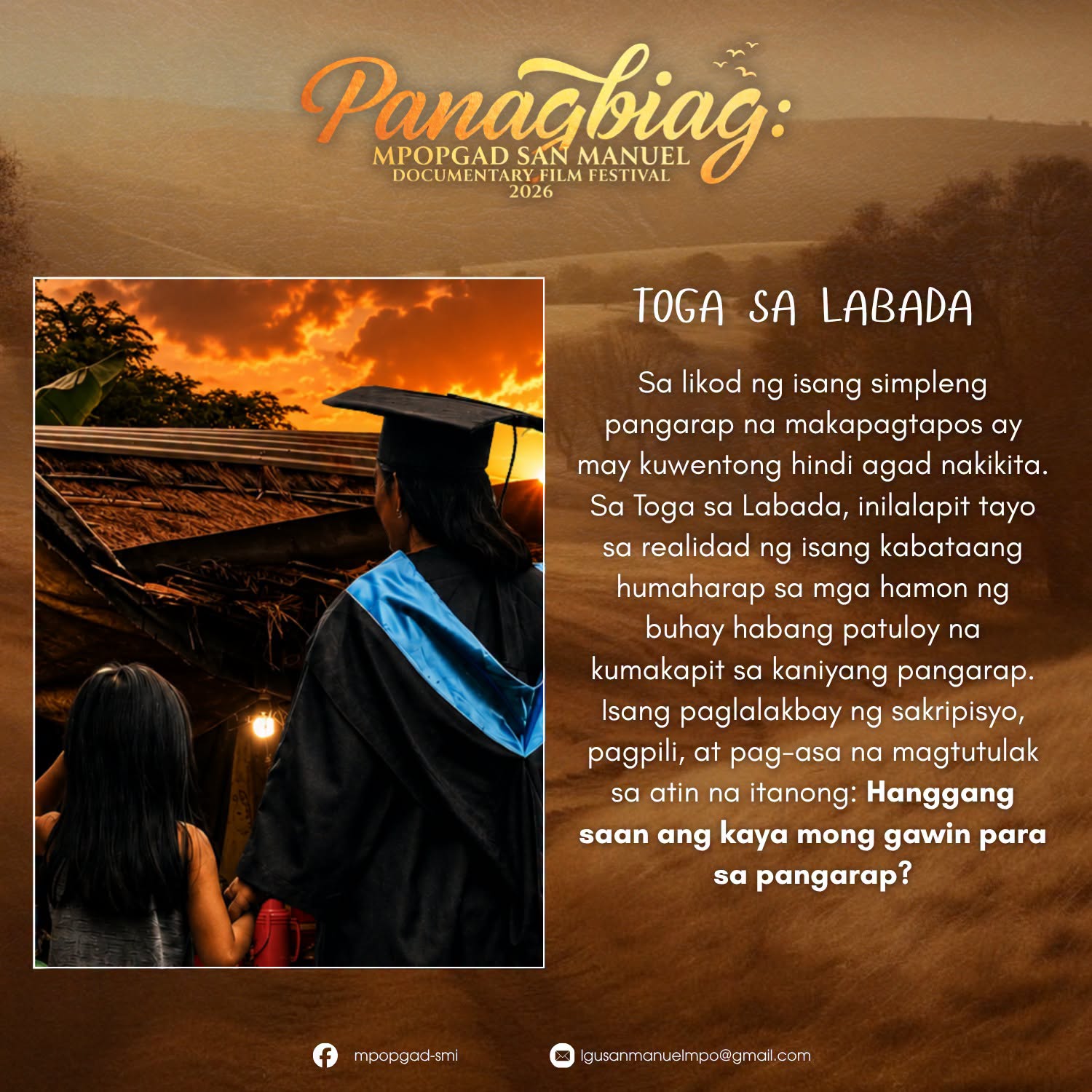
  • Toga sa Labada: Traces the inspiring trajectory of a young adult who balanced multiple service jobs to put herself through school. Now serving her community as a school teacher, her story demonstrates how personal resilience can come full circle to uplift other San Manuelino youth.


Capacity Building for Civic Engagement: The Workshop Behind the Stories

Central to the success and depth of the Panagbiag Documentary Film Festival’s output was an intensive preparatory workshop conducted in July 2026. Recognizing that effective policy advocacy requires ethical and skilled storytelling, the organizers partnered with the North Luzon Cinema Guild, Inc. (NLCGI) to mentor aspiring young filmmakers.

Facilitated through the Commission on Population and Development (CPD) Region 02 under the guidance of Diane Rose Maltizo, the workshop provided the student teams with essential tools for social documentary filmmaking. Key areas of training included:

  • Story Identification & Narrative Development: Helping students translate complex community observations into structured, compelling documentary narratives.

  • Ethics and Sensitivity Handling: Equipping participants to navigate delicate local realities—such as teenage pregnancy, mental health struggle, and child labor—with care, safety, and psychological awareness.

  • Dignity and Ethical Representation: Training filmmakers to portray their subjects not merely as victims of circumstance, but with nuance, respect, and human dignity, ensuring their stories foster empathy rather than exploitation.

By grounding these young creatives in ethical film practice prior to production, the initiative ensured that the resulting documentaries served as both artistic accomplishments and credible, respectful foundations for local policy discussions.

Cinema as a Catalyst for Participatory Democracy and Local Action

The success of the Panagbiag Documentary Film Festival demonstrates that granting young people creative resources and editorial agency transforms cinema from mere passive entertainment into an active mechanism for civic engagement.

By capturing the real, unscripted conditions of their communities, these student documentarists have stepped directly into the sphere of local policy advocacy.

Screening these five entry films directly before local decision-makers bridges the traditional divide between grassroots youth experiences and municipal policymaking. This direct engagement fosters a dynamic model of participatory democracy where local leaders are confronted with authentic visual narratives rather than abstract statistical reports. Consequently, the stories, struggles, and aspirations highlighted on screen provide concrete context to guide upcoming legislative agendas, youth budget allocations, and targeted community interventions—ensuring that local governance is genuinely informed by the young people it serves.